



Cybersecurity Dallas: Is Your DFW Business Ready for the 2026 “Digital Stampede”?
If there is one thing we know in North Texas, it’s that everything is bigger here. Our stadiums, our state fair, and—unfortunately—our target on the backs of local business owners. As we move through 2026, the landscape of cybersecurity Dallas has shifted from “nice-to-have” IT support to a high-stakes game of digital survival.
If you’re running a business in Deep Ellum, managing a medical clinic in Plano, or overseeing a logistics firm near DFW Airport, the threats you face today aren’t the same ones you faced two years ago. Hackers have traded in their basic scripts for sophisticated AI, and they aren’t just looking for the “big fish” anymore. In fact, recent data shows that nearly 70% of cyberattacks now target small-to-midsized businesses because they are perceived as having thinner defenses.
But don’t pull the fire alarm just yet. Protecting your company doesn’t require a secret bunker; it requires a local strategy that understands the specific threats facing our region.
The New “Texas Hold ‘Em”: Why Hackers Love Dallas in 2026
Dallas is a global hub for finance, healthcare, and energy. While that’s great for our local economy, it makes us a playground for “Ransomware-as-a-Service” (RaaS) groups. These aren’t just kids in basements; these are professional organizations that rent out attack software to low-skilled criminals for a cut of the profit.
In 2026, we are seeing a “Triple Extortion” trend:
- Encryption: They lock your files.
- Data Theft: They steal your customer list and threaten to leak it.
- DDoS Attacks: They shut down your website entirely until you pay.
For a Dallas business, the cost of a breach isn’t just the ransom—it’s the “bricking” of your hardware and the catastrophic loss of reputation. When your neighbors at the Dallas Regional Chamber talk about growth, they are also talking about the increased risk that comes with being a tech-forward city.
The Rise of the “Deepfake” CEO: AI-Driven Phishing
Remember when you could spot a phishing email by its terrible grammar and suspicious links? Those days are gone. With the evolution of generative AI, cybercriminals are now crafting “perfect” emails that sound exactly like your project manager or your favorite vendor.
Even more alarming is the rise of audio and video deepfakes. We’ve seen cases in North Texas where an accounting clerk received a “Zoom call” from their CEO authorizing an emergency wire transfer. The voice sounded right, the face looked right, but the money went straight to a digital wallet in Eastern Europe.
This is why cybersecurity Dallas experts are moving toward “Identity-Bound Authentication.” It’s no longer enough to have a password; you need a system that verifies the human behind the screen through biometric signals and behavioral analytics.
Table: The 2026 Threat Landscape for DFW Businesses
| Threat Type | Local Impact Level | What It Looks Like |
| AI Phishing | Critical | Emails/Texts that perfectly mimic your bank or boss. |
| TDPSA Violations | High | Fines for failing to protect Texas resident data. |
| Ransomware 3.0 | Critical | Total operational shutdown and public data leaks. |
| IoT Vulnerabilities | Medium | Hackers entering your network through a smart thermostat or office camera. |

Compliance is No Longer a Suggestion: The TDPSA Factor
If you operate in Texas, you are likely already familiar with the Texas Data Privacy and Security Act (TDPSA). As of 2026, the “grace period” for many of these regulations has vanished. The Texas Attorney General’s office has stepped up enforcement, focusing on businesses that collect consumer data without proper safeguards.
For many Dallas business owners, compliance feels like a maze. Between HIPAA for healthcare, PCI for retail, and the TDPSA for everyone else, the paperwork alone is a full-time job. This is where professional cybersecurity Dallas services provide the most value. We don’t just “install antivirus”; we ensure your digital architecture meets the strict legal standards required to avoid six-figure regulatory fines.
Pro Tip: Check your cyber insurance policy immediately. Many 2026 policies now require Multi-Factor Authentication (MFA) and Endpoint Detection and Response (EDR) as a baseline. If you don’t have them, your claim could be denied after a breach.
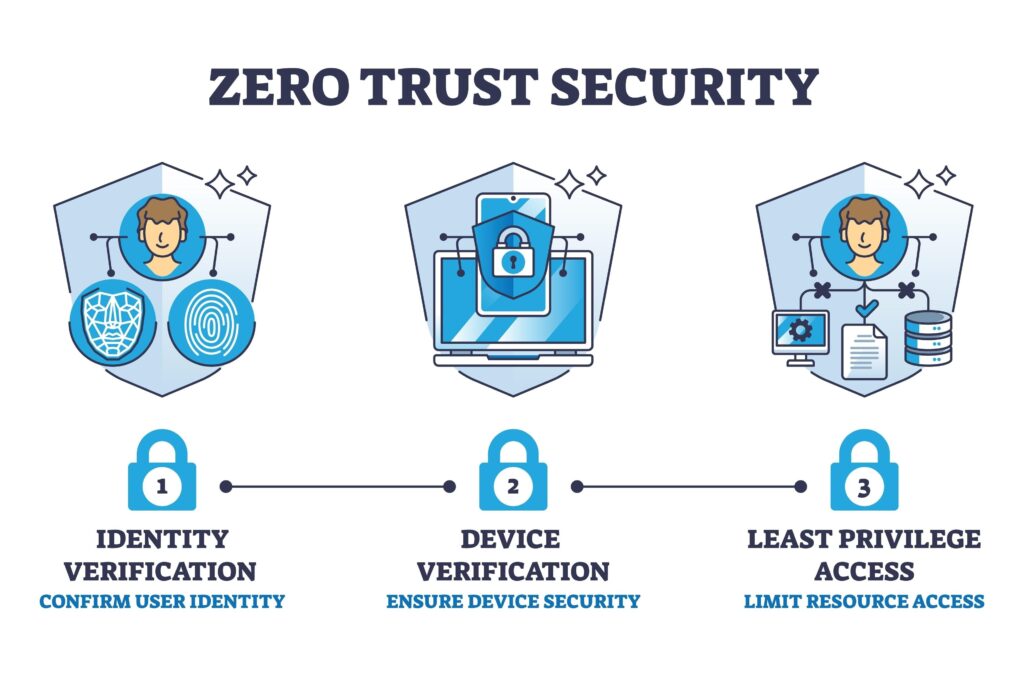
Building a “Zero Trust” Culture in the Big D
The old way of thinking was: “Once you’re inside our office Wi-Fi, you’re safe.” In a world of remote work and hybrid offices in Las Colinas or Uptown, that logic is dangerous.
Zero Trust Architecture is the gold standard for 2026. The philosophy is simple: Never trust, always verify. * Micro-segmentation: If a hacker gets into your office printer, they shouldn’t be able to jump over to your payroll server.
- Least Privilege Access: Your marketing intern doesn’t need access to the company’s financial records.
- Continuous Monitoring: Systems that flag “impossible travel” (e.g., an employee logging in from Dallas and then from London five minutes later).
Why Local “Cybersecurity Dallas” Support Beats a 1-800 Number
When a server goes down or a “red screen of death” pops up on your reception desk, you don’t want to wait in a ticket queue for a technician in a different time zone. You need someone who can be on-site at your North Dallas office if things get hairy.
Local providers like JAC Infotech understand the specific regional threats—like the recent uptick in “vendor invoice fraud” targeting Texas construction and manufacturing firms. We live where you live, and we have a vested interest in keeping the Dallas business community thriving and secure.
The 3-2-1-0 Backup Rule for 2026
To stay ahead of ransomware, we recommend the updated 3-2-1-0 rule:
- 3 copies of your data.
- 2 different media types (Cloud + Physical).
- 1 copy off-site (Air-gapped from your network).
- 0 errors after daily automated recovery testing.
Conclusion: Don’t Wait for the “Digital Dust-Up”
The question for Dallas business owners is no longer if an attack will happen, but when your defenses will be tested. By staying proactive, implementing Zero Trust principles, and staying compliant with Texas laws, you can turn cybersecurity from a source of anxiety into a competitive advantage.
Your customers want to know their data is safe. Your employees want to know their workflows won’t be interrupted. And you? You want to focus on growing your business in the greatest city in Texas.
According to the FBI’s Internet Crime Complaint Center (IC3), business email compromise continues to be one of the most financially damaging online crimes. Don’t let your hard work become another statistic in their annual report.